What to inspect when shopping for a used truck in Indianapolis
Start with the basics: why a checklist matters
Buying a used truck is a practical move for many Indianapolis drivers. Whether you need something for hauling equipment, navigating winter roads, or simply want the versatility a truck offers, the used market can deliver solid value. But a used truck is also a machine with history. Without a careful look, you might end up with someone else's problem. A simple checklist helps you stay objective when the excitement of a new purchase kicks in. Below are the key points to check before you sign anything.
Vehicle history and documentation
Before you even pop the hood, ask for the vehicle history report. Services like Carfax or AutoCheck can reveal accidents, title problems, or odometer rollbacks. A clean history does not guarantee perfection, but it gives you a baseline. Also check that the truck has a clear Indiana title. If the seller hesitates to provide a report, that is a red flag worth walking away from.
Look at the maintenance records. A truck with regular oil changes, transmission service, and documented repairs is a truck that was cared for. Gaps in service history may mean deferred maintenance, which can cost you later.
Exterior and body condition
Indianapolis winters mean road salt and moisture, which can accelerate rust. Walk around the truck and inspect the lower edges of the doors, the wheel wells, and the bed. Surface rust on a frame is one thing; flaking metal that crumbles under a fingernail is another. Check for signs of body work: mismatched paint, uneven panel gaps, or overspray inside the door jambs can indicate accident repairs. A truck that looks straight and solid from the outside is more likely to have been treated well.
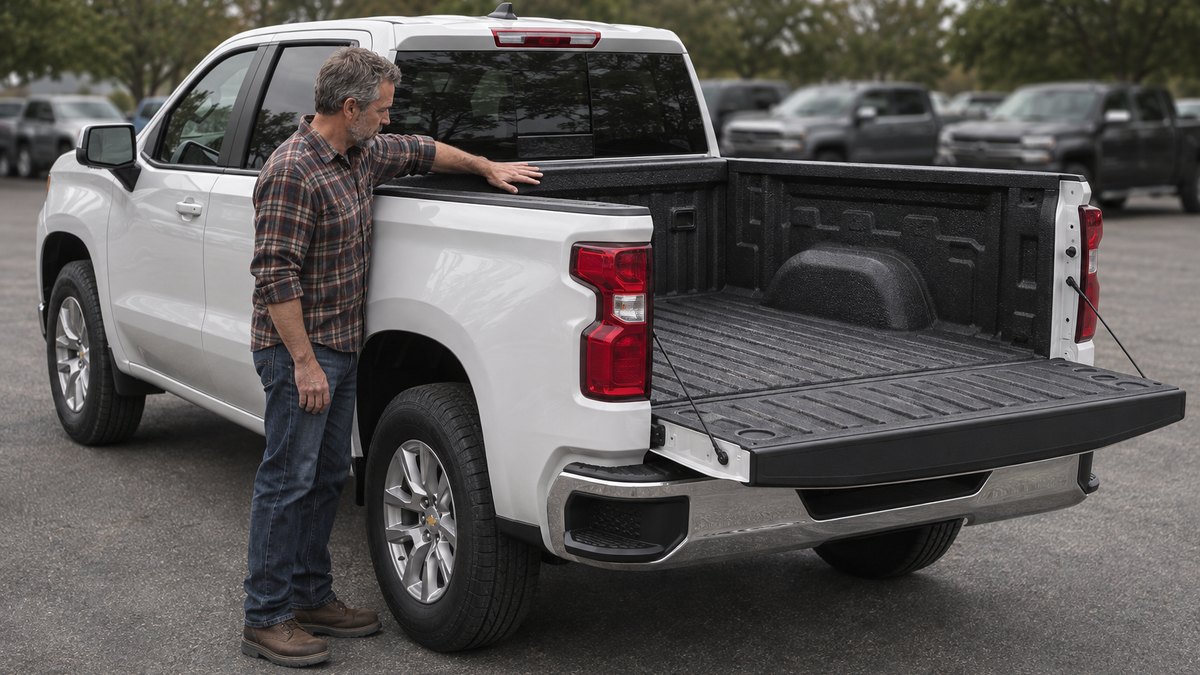
Open and close all doors, including the tailgate. They should latch firmly and not sag. Look at the tailgate cables or hinges. A tailgate that does not close properly can be a hassle and a safety concern when carrying loads.
Under the hood: engine and mechanicals
With the engine cold, remove the oil fill cap and look inside. Clean oil with no sludge or burnt smell is a good sign. Check the dipstick for the oil level and condition. Do the same for the transmission fluid if the truck has a dipstick for it. Coolant should be bright in color and at the proper level, not rusty or oily. A truck that has been maintained will show clean fluids and no leaks around gaskets or seals.
Start the engine and listen. A smooth idle with no unusual rattles, whines, or knocks is what you want. Let it run until it reaches operating temperature, then check for exhaust smoke. Light steam on a cold day is normal; thick white or black smoke is not. Take note of any warning lights on the dash. If any are on, ask why.
Transmission and drivetrain
Test drive the truck on a mix of roads. Pay attention to how the transmission shifts. It should move through gears smoothly without hesitation or hard jolts. For an automatic, the shift from Park to Drive should be firm but not jarring. Listen for clunks when you shift between forward and reverse. A manual transmission should have clutch engagement that feels consistent and not too high or too low.
During the drive, turn off the radio and listen for any grinding, whining, or clicking from the drivetrain. Those sounds can point to worn universal joints, a failing differential, or issues with the transfer case on a four-wheel-drive model. If the truck has four-wheel drive, engage it on a safe straight road to make sure it works without binding or odd noises.
Suspension and steering
Push down on each corner of the truck. It should bounce once and settle. If it keeps bouncing, the shocks or struts may be worn. While driving, find a smooth straight road and let go of the wheel briefly. The truck should continue straight. If it drifts, the alignment is off or there is wear in the steering components. Listen for squeaks or pops when turning the wheel at low speed. Those sounds often mean worn ball joints or tie rod ends.
Check for uneven tire wear. If the inside or outside edges are much more worn than the center, the alignment or suspension has issues. Cupped or scalloped wear patterns suggest worn suspension bushings or shocks. New tires can mask these problems, so look closely.
Brakes
Brakes are a safety-critical system. During the test drive, find an empty parking lot and perform a few moderate stops from 20-25 mph. The truck should stop straight with no pulling to one side. Listen for any grinding, scraping, or squealing that goes beyond normal brake dust. If you feel a pulsing in the brake pedal, the rotors may be warped. A spongy pedal can mean air in the brake lines or a failing master cylinder. Any of these signs warrant a professional inspection before purchase.
Interior and electronics
Sit in the driver's seat and adjust all the controls: steering wheel tilt, seat adjustments, pedals. Check that all windows roll up and down smoothly and that the door locks work from both inside and outside. Test the air conditioning and heat on all settings. In an Indianapolis summer, a working AC is not a luxury; it is a necessity. Turn on the radio, check the USB ports if available, and make sure the interior lights and dome light work.
Look at the condition of the seats and carpet. Stains or tears are cosmetic, but excessive wear on the driver's seat or pedal rubbers can indicate high mileage that does not match the odometer. Check that the seat belts retract properly and that the buckles latch and release easily.
Bed and cargo area
For many truck buyers, the bed is the whole point. Open the tailgate and look inside. Check for dents, rust holes, or damage from heavy loads. A bed liner can hide problems, so pull it up if possible. Look at the tie-down hooks and stake pockets. If you plan to haul frequently, these need to be solid. Also inspect the underbody near the bed for rust, especially around the crossmembers and the rear axle area.
Test drive: the real-world check
A test drive is your best chance to feel how the truck behaves. Take at least 20 minutes. Drive on city streets, a highway, and a rough road if you can. Listen for rattles from the cab or the bed. Feel how the truck accelerates and how it handles corners. A truck that feels solid and predictable is usually a good bet. One that feels loose or unsteady deserves a closer look or a pass.

During the drive, take note of the engine temperature gauge. It should stay steady in the middle of the range. If it climbs high or fluctuates wildly, the cooling system may have problems. Watch the fuel gauge as well; erratic behavior may indicate a sender issue.
Finance and paperwork
Once you are satisfied with the truck's condition, turn to the paperwork. Make sure the seller can provide a bill of sale, the title, and any financing documents if you are going through a bank or credit union. If you are buying from a dealer like Ray Skillman Chevrolet, they will handle the paperwork and can often offer financing options that fit your budget. Take your time reading the terms and ask questions about anything you do not understand.
A good dealer will also let you have the truck inspected by an independent mechanic. If the seller resists, that is a sign to walk away. A pre-purchase inspection by a trusted shop can catch issues you might miss and give you peace of mind.
Final check: trust your instincts
A used truck is a big purchase. If something feels off - whether it is the seller's attitude, a strange noise, or a worn part that was not disclosed - listen to that feeling. There are many used trucks for sale Indianapolis, and the right one will check your boxes and feel right. Take your time, use this checklist, and you will drive away with a truck you can depend on.
Ends · CARDEALERSHIPSPACE